Quick Facts
- Two-year ACGME-accredited fellowship
- Sponsored through NewYork-Presbyterian Hospital and Columbia University Department of Biomedical Informatics
- Based at Columbia University Irving Medical Center
- Open to physicians from all clinical specialties
- Fellows maintain clinical practice in their primary specialty
- Applications submitted through ERAS
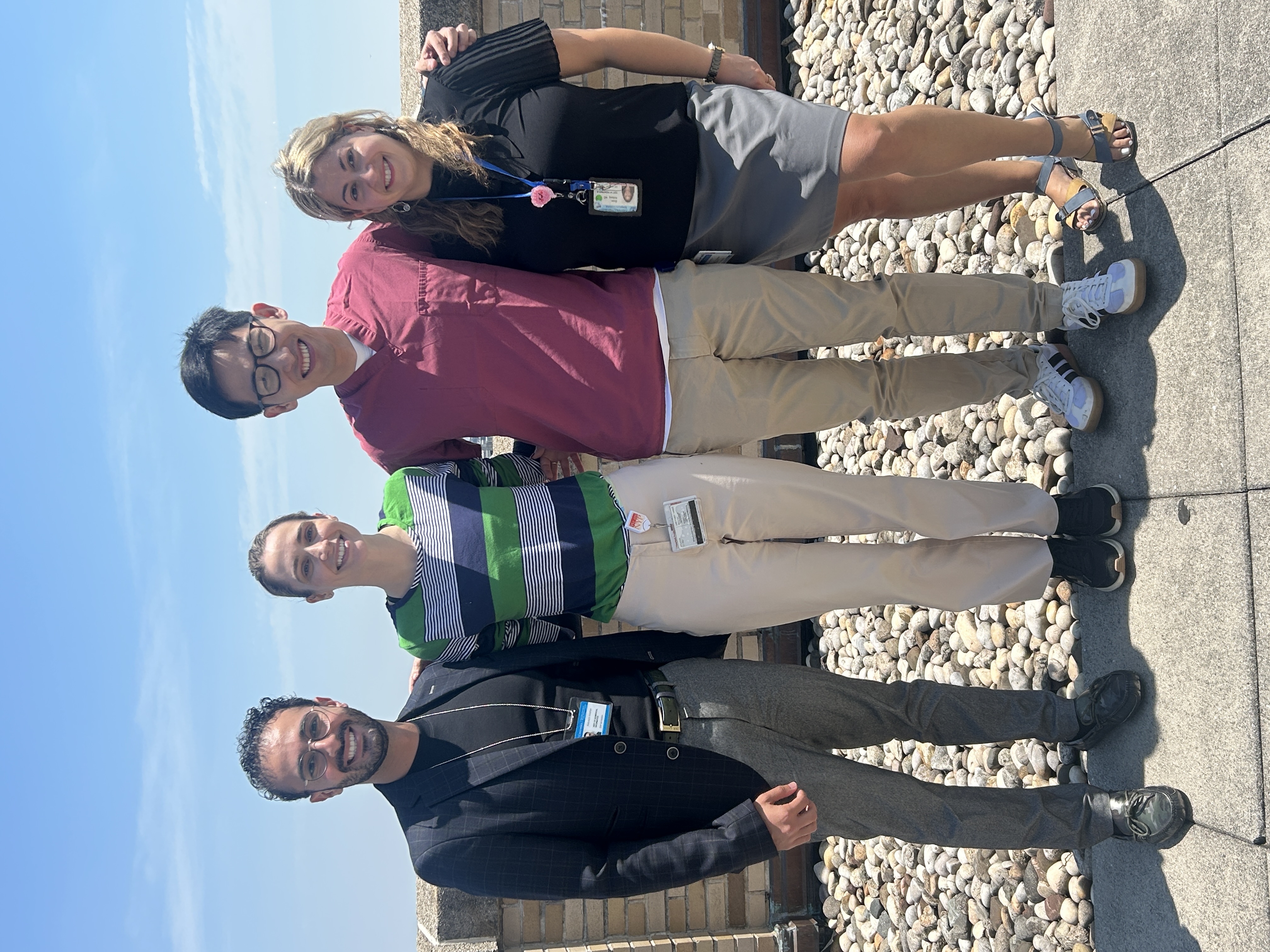
Program Overview
Clinical informatics turns clinical knowledge, data, workflow, and technology into better care. At Columbia/NYP, fellows train in an environment that brings together academic biomedical informatics, frontline clinical care, enterprise health IT, clinical data and analytics, quality improvement, implementation science, and health system leadership.
The program prepares physicians to lead informatics work across academic, clinical, operational, public sector, and industry settings. Fellows learn how to identify clinical problems, translate them into informatics questions, design usable technology-enabled solutions, evaluate impact, and guide implementation in real-world care delivery environments.
Why Columbia/NYP
A historic home for biomedical informatics: Columbia DBMI has a longstanding role in biomedical informatics education, research, clinical computing, decision support, terminology, data science, and data exchange. Fellows join a department where informatics is a core academic discipline.
A real health system implementation environment: NewYork-Presbyterian gives fellows exposure to the operational realities of EHR optimization, clinical decision support, reporting and analytics, workflow redesign, patient safety, governance, virtual care, and enterprise technology implementation.
A bridge between research and operations: The fellowship is designed for physicians who want to translate data, evidence, and technology into usable tools, reliable workflows, measurable outcomes, and sustainable clinical programs.
Specialty-flexible physician leadership training: Fellows maintain clinical practice in their primary specialty and bring specialty-specific questions into informatics work across inpatient, ambulatory, procedural, and subspecialty settings.
A New York City training environment: The clinical complexity, scale, and diversity of New York City create a rich setting for learning how informatics can improve care delivery across populations, sites, specialties, and workflows.
Training Experience
Across two years, fellows combine didactics, seminars, mentored projects, operational experiences, scholarly work, and ongoing clinical practice. The curriculum can be organized around five core training pillars:
- Foundations of clinical informatics: Clinical workflow, health IT, implementation, evaluation, safety, privacy, security, interoperability, and health policy.
- EHR and clinical decision support: EHR optimization, order sets, documentation, alerts, usability, governance, and safe implementation of clinical decision support.
- Data, analytics, and responsible AI: Clinical data, reporting, dashboards, cohort discovery, predictive analytics, responsible AI evaluation, governance, monitoring, and secondary use of EHR data.
- Operations, quality, and implementation: Population health, quality improvement, patient safety, virtual care, remote monitoring, workflow redesign, and operational leadership.
- Scholarship and career development: Mentored scholarly projects, presentations, publications, implementation deliverables, leadership development, and preparation for clinical informatics careers.
A Focus on Experiential Learning
Fellows learn by participating in the settings where informatics work happens: governance meetings, EHR optimization workgroups, analytics reviews, clinical decision support design sessions, quality and safety initiatives, operational planning, and mentored project teams.
Example experiential areas may include:
- Ambulatory and inpatient informatics
- Clinical decision support and EHR optimization
- Reporting, dashboards, clinical analytics, and data warehousing
- Research informatics, cohort discovery, OMOP/common data models, and secondary use of EHR data
- AI evaluation, responsible AI governance, predictive analytics, and model monitoring
- Population health, quality improvement, patient safety, and implementation science
- Virtual care, remote monitoring, and enterprise operational informatics
- Usability, workflow design, privacy, security, interoperability, and health IT policy
Scholarly projects and applied informatics work
Each fellow completes mentored work that addresses a real clinical, operational, or research need. Projects may be research-oriented, operational, quality-focused, implementation-focused, or hybrid.
Mentorship, Community and Career Development
Fellows are mentored by Columbia DBMI faculty and by clinical informatics, health IT, analytics, quality, safety, and operational leaders across Columbia/NYP. Through these mentorship relationships, fellows refine their clinical interests, apply informatics methods to real-world projects, and develop the skills and experiences needed for a wide range of careers in clinical informatics.
Fellows participate in DBMI seminars and have access to the scholarly resources of Columbia University Irving Medical Center.
Clinical Practice and Speciality Flexibility
The fellowship is open to physicians from any clinical specialty. Fellows maintain clinical practice in their primary specialty during training, allowing them to bring frontline clinical insight into informatics projects while preserving specialty expertise.
Who Should Apply?
- Physicians who want to lead health IT, analytics, AI, implementation, quality, safety, or digital health work.
- Fellows who are self-directed and motivated to take ownership of projects while working collaboratively with clinical, operational, technical, and research partners.
- Applicants from any specialty who are board-eligible or board-certified in a primary specialty before fellowship start.
- Candidates interested in EHR optimization, clinical decision support, data science, research informatics, responsible AI, quality improvement, patient safety, population health, implementation, or operational leadership.
- Prior informatics, data, EHR, research, quality improvement, or operational experience preferred but not necessary.
How To Apply
Applications are submitted through ERAS under Clinical Informatics (Internal Medicine). ACGME Program Number: 1393514002
Program Leadership
- Program Director: Sivan Kinberg, MD MA
- Associate Program Director: Abdulaziz Alkattan, MD MPH
Contact Us
For questions about the Columbia/NewYork-Presbyterian Clinical Informatics Fellowship, please contact:
- Associate Program Director: Abdulaziz Alkattan, MD, MPH (aa4481@cumc.columbia.edu)
- Program Coordinator: Angely Arriaza Portillo (aa5691@cumc.columbia.edu)