From Health Data to Discovery:
Learn Real-World Evidence at Columbia’s OHDSI Summer School
Check this page over the coming weeks for information about the 2027 Summer School!

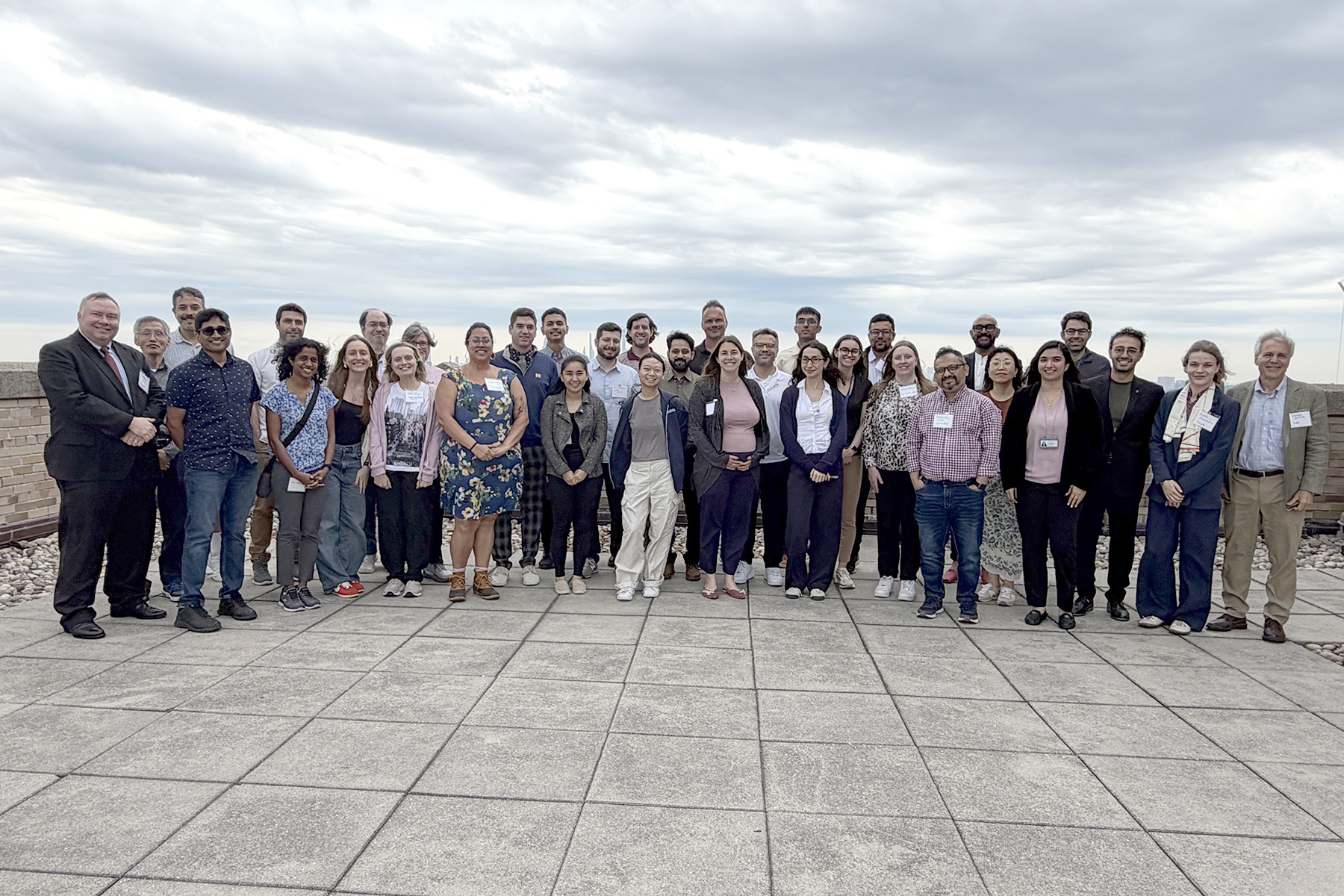
For the past two summers, leaders from the OHDSI community have welcomed researchers and data scientists from around the world to Columbia University’s Department of Biomedical Informatics for the Summer School in Observational Health Data Science & Informatics, AI, and Real-World Evidence.
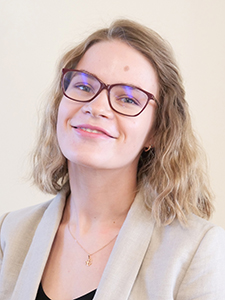
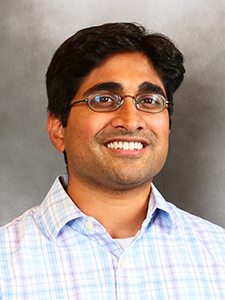
Led by faculty members George Hripcsak, Patrick Ryan, Anna Ostropolets, and Karthik Natarajan, each intensive session has been intentionally capped at 30 participants to provide an immersive, highly interactive learning environment with hands-on support.
Following successful cohorts in both 2025 and 2026, plans are underway for next year’s program. Please check back on this page in the coming months for details and registration information regarding the 2027 Summer School.
About the Summer School
The Columbia OHDSI Summer School provides health professionals, researchers, and industry practitioners with an immersive, hands-on training to working with real-world health data and generating real-world evidence (RWE). Participants will explore the types of healthcare data captured during routine clinical care—such as electronic health records and administrative claims—and learn how to standardize these data using the OMOP Common Data Model to support collaborative, distributed research as part of a data network.
Over the course of the week, participants will engage with three real-world analytic use cases:
- Clinical characterization – using descriptive epidemiology to study disease natural history and treatment patterns
- Population-level estimation – applying causal inference to assess drug safety and comparative effectiveness
- Patient-level prediction – leveraging machine learning for early disease detection and precision medicine
Participants will be guided through the full RWE study lifecycle: from designing observational studies tailored to each use case, to applying open-source tools form the OHDSI community, and executing analyses across real-world data sources.
The curriculum combines foundational lectures on analytical methods with hands-on, interactive, faculty-led group exercises. In addition, participants will have dedicated time to develop and advance their own study concepts with personalized feedback and mentoring.
Audience & Prerequisites
The Summer School is designed for individuals interested in learning how to design and execute observational database studies focused on clinical characterization, population-level estimation, and patient-level prediction using distributed real-world data networks. Participants will also learn how to assess the reliability and interpretability of real-world evidence.
The program is ideal for clinicians, data scientists, statisticians, epidemiologists, informaticians, and health policy researchers from academia, the pharmaceutical and medical technology industries, health systems, and government agencies.
Study design and implementation will use OHDSI’s open-source tools, including ATLAS and the HADES R packages. No prior programming experience is required.
Faculty
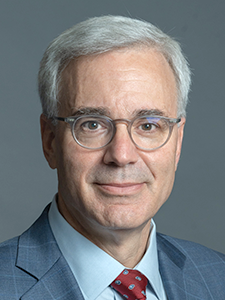
George Hripcsak, MD, MS
Vivian Beaumont Allen Professor,
Columbia Biomedical Informatics
Patrick Ryan, PhD
Anna Ostropolets, PhD
Karthik Natarajan, PhD
Assistant Professor,
Columbia Biomedical Informatics
Testimonials
2026 Cohort
“The Columbia Summer School for OHDSI was highly insightful. I especially enjoyed working on real data across EHR and Claims and understanding the strengths and limitations of source data types. Being able to ask a real question and translating this to a robust clinical idea that we could subsequently answer with real data using OHDSI standardized tools and methodologies on top of the OMOP CDM was definitely unique and one of the key value propositions of this summer school. The faculty did a great job teaching the school in an engaging and highly hands-on manner that made the entire week very enjoyable and engaging. I would consider doing this summer school again! That’s how good it was. I highly recommend it.”
Chris Baldwin, Commercial Director, Hyper Unison
“This week was an excellent learning experience. I gained hands-on experience with the OHDSI ecosystem, particularly the OMOP Common Data Model and ATLAS, and learned how these tools support standardized observational research and reproducible analytics. The training has broadened my perspective on using real-world data for epidemiologic studies and will directly enhance my research on cardiovascular disease, genomics, and precision medicine. I also greatly valued the opportunity to connect with researchers from diverse backgrounds and become part of the collaborative OHDSI community.”
Mohammad Shahriar, Senior Research Analyst, The University of Chicago
“This was a great hands-on experience with a very specific and useful set of tools. It took what initially felt like a daunting process of self-discovery and turned it into something I now feel confident I can work through. Even if I cannot complete every step immediately on my own, I now have a clear understanding of what is required to get a project like this done on the OHDSI network.”
Aziz Alkattan, Assistant Professor of Biomedical Informatics, Columbia University
2025 Cohort
“The OHDSI Summer School exceeded all expectations. The course offered a deep, hands-on dive into real-world data methodology, led by world-class instructors and supported by an incredibly open, collaborative community. Working hands-on with a team to explore a real
research question brought the full OHDSI workflow to life. I highly recommend this course to anyone working with health data, especially clinical scientists and data scientists eager to strengthen their skills in transparent, high-quality RWD research.”
– David Bard, Professor of Pediatrics and Director, Biomedical & Behavioral Methodology Core, University of Oklahoma
“I particularly appreciated the OHDSI system in conducting the observational study to generate real-world evidence, as well as the methodology that handled hundreds of covariates, and the application of a negative control outcome to validate the research results. Through this summer school course, I gained a deeper understanding of OHDSI and its potential to generate real-world evidence.”
– Long-Sheng Chen, Professor, National Taipei University of Technology, Taiwan