
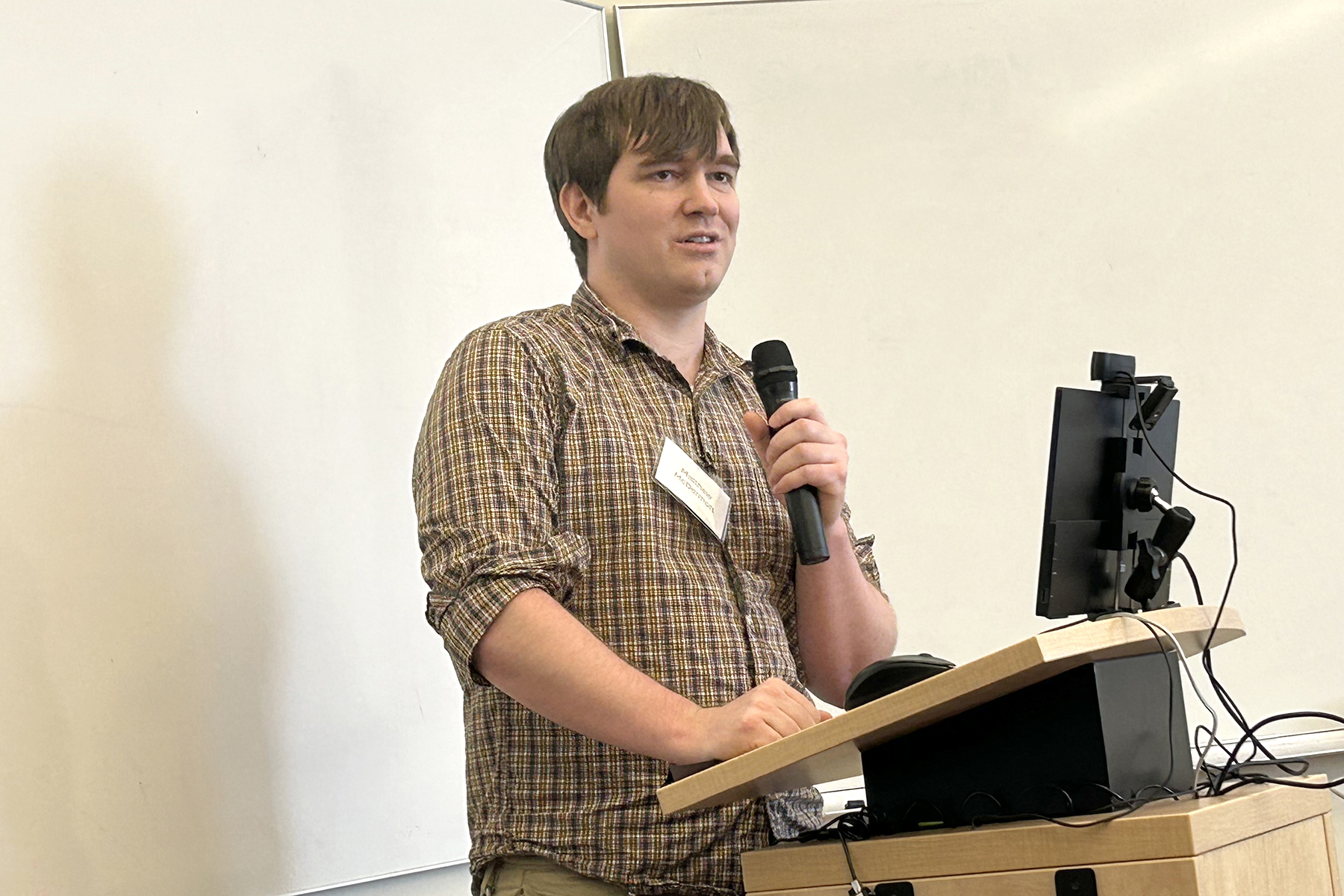
 When Matthew McDermott looks at a hospital’s worth of patient records, he doesn’t just see a collection of doctor’s notes and lab results. He sees a living timeline—millions of clinical events unfolding over time—that could help predict a patient’s future. For years, however, that potential has been trapped in technical silos—digital barriers that make it nearly impossible for medical data and AI tools to move between hospitals.
An assistant professor at Columbia University’s Department of Biomedical Informatics (DBMI), McDermott is working to tear down those barriers. His research focuses on two pillars: developing foundation models capable of learning the complex patterns of human health, and building MEDS, an open–source data ecosystem designed to make medical records both usable and shareable for modern artificial intelligence.
At Columbia, McDermott is helping to push healthcare toward what he calls its long-awaited “ImageNet moment”—a breakthrough, modeled after the massive database that revolutionized computer vision, where AI moves from a specialized curiosity to a broadly trusted and transformative tool for medicine.
Foundation Models: The General-Purpose Brains of Medicine
For decades, medical AI has largely been built to solve narrow problems—flagging a tumor on an X-ray or predicting risk for a single condition. McDermott’s work takes a broader view. He focuses on foundation models: general-purpose systems trained to learn the underlying patterns of human health before being adapted to specific clinical questions.
These models are pre-trained on vast and varied datasets—millions of patient histories, lab results, and clinical notes—allowing them to absorb the structure of medical data at scale. Rather than starting from scratch for each new task, foundation models carry forward that shared understanding, making them more flexible, powerful, and ultimately more useful across healthcare.
McDermott’s commitment to this approach is deeply personal. He recalls his sister’s “arduous diagnostic journey” through multiple autoimmune diseases and a moment that fundamentally shaped his career. When he asked her physician about the likelihood that a proposed treatment would work, the answer stunned him. “We don’t know,” the doctor said. “We don’t have that information.”
 “I was floored,” McDermott remembers. The exchange exposed what he calls a “huge gulf” between the volume of health data collected and how little of it is translated into actionable knowledge at the bedside. “That gulf really affects people,” he said.
At a technical level, foundation models treat a patient’s medical history as a sequence of events unfolding over time. In much the same way that language models learn to predict the next word in a sentence, these systems learn to anticipate what may come next in a patient’s care trajectory. Over time, McDermott hopes they will uncover latent phenotypes—hidden patterns that group patients in clinically meaningful ways, shedding new light on disease subtypes, treatment response, and risk.
“We’re constantly seeing new examples where machine learning models pick up on signals that humans didn’t realize were there,” McDermott said. “There is so much health data collected at the point of care. It’s such a waste to leave that stone unturned.”
At Columbia, this work is not just about advancing algorithms. It is about building a future where medical data can finally deliver on its promise—so that when patients and families ask about the likelihood of a treatment working, the answer is informed by evidence, not uncertainty.
The MEDS Ecosystem: A Universal Language for Health Data
Even the most powerful AI is useless if it cannot process the data correctly. Currently, hospitals encode the same clinical events, like heart attacks or lab results, in fundamentally different ways, making it difficult for AI systems to learn across institutions. This lack of a standard has been a major bottleneck in health AI research. McDermott’s answer is MEDS (Medical Event Data Standard), an open-source ecosystem that acts as a universal adapter for medical research.
This work is collaborative, designed to complement existing standards like the OMOP Common Data Model rather than replace them. In fact, McDermott believes MEDS can augment the OHDSI community—a global observational health data science research community coordinated by DBMI—by making its massive data network more accessible to the growing field of artificial intelligence. Rather than forcing every institution to use identical medical vocabularies, MEDS standardizes the technical structure of health data, much like a shipping container standardizes how goods are transported, regardless of what’s inside. That consistency allows data already curated in OMOP to be reused directly in Python-based AI workflows.
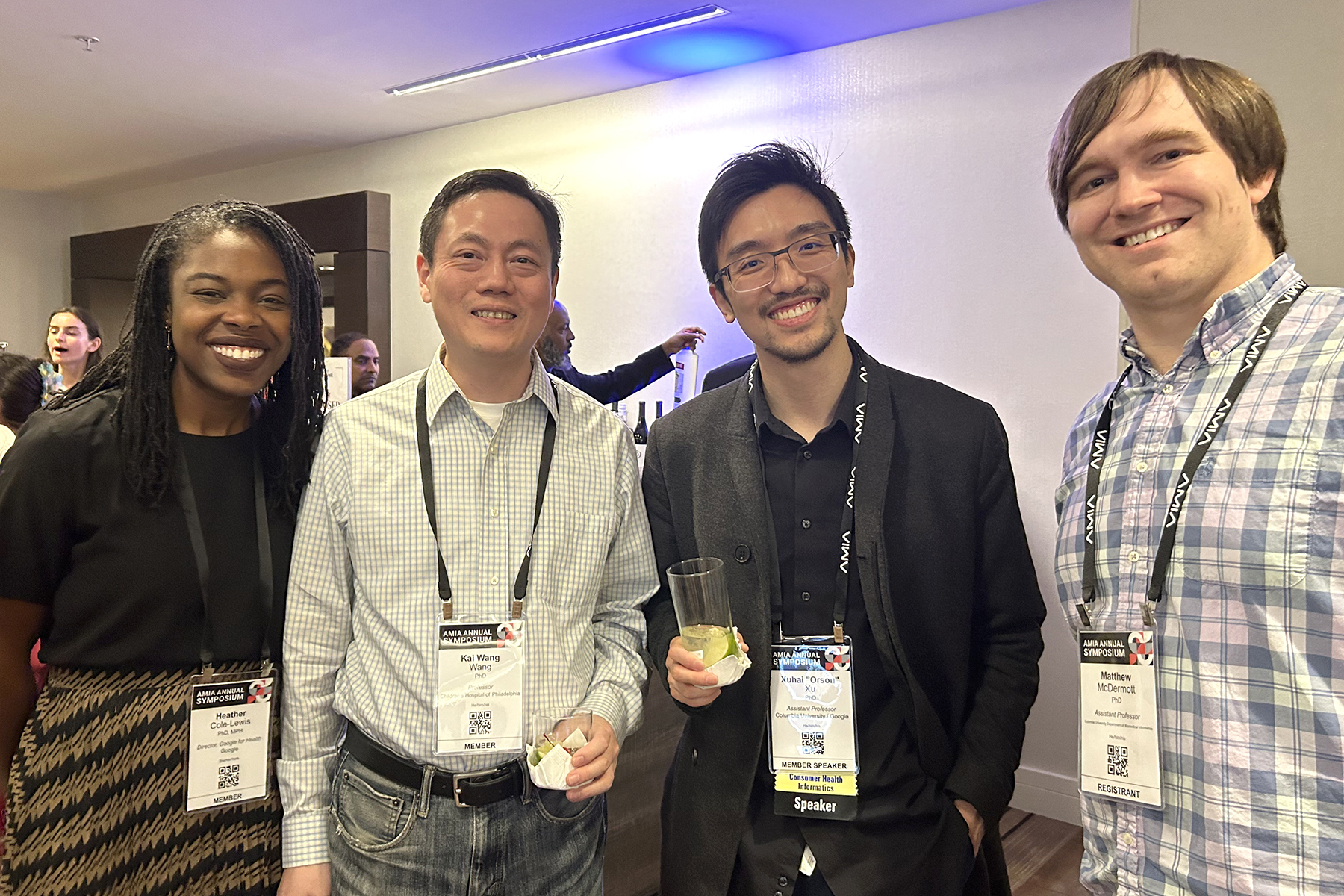
McDermott supports the OHDSI mission, noting that it is the dominant platform for generating real-world evidence for a very good reason. By using a publicly available sharing process, researchers can move their data from OMOP into the MEDS format, allowing them to benefit from OHDSI’s standardized medical vocabularies while utilizing the high-speed computing power required for modern AI.
“MEDS is not competing with OHDSI,” McDermott clarifies. “In fact, many of our users are people whose raw data lives in the OMOP CDM already.”
Ultimately, McDermott believes that by working together, these standards can help researchers spend less time engineering bespoke data pipelines and more time asking meaningful clinical and scientific questions. For example, a researcher studying disease progression across multiple hospitals can now move from OMOP-curated data to large-scale AI modeling without rebuilding their data pipeline from scratch. He sees a future where the OHDSI network and MEDS combine to empower a future where shared data standards and shared AI tools allow discoveries to move faster—and more reliably—from data to insight.
From Mentorship to Mission: Why DBMI Was the Natural Next Step
Throughout his career, McDermott has been shaped by mentors who model both intellectual rigor and a deep sense of responsibility to patients. He points to his doctoral advisor at MIT, Peter Szolovits, as a central influence—someone whose way of thinking about health data and its real-world implications helped draw him fully into the field. He also credits colleagues and mentors such as Marzyeh Ghassemi, Tristan Naumann, Zachary Kohane, and Marinka Žitnik for shaping how he approaches research: collaboratively, critically, and with an eye toward impact beyond a single paper or model. Just as important, many of these relationships grew within open, interdisciplinary environments—places where students and early-career researchers were encouraged to tackle hard problems together.
That ethos is what ultimately drew McDermott to Columbia’s Department of Biomedical Informatics. He saw in DBMI a department where methodological innovation, clinical relevance, and ethical responsibility are not siloed but deeply intertwined. Faculty are not only building new AI systems but also grappling with how those tools should be evaluated, deployed, and governed in real healthcare settings. The presence of close collaborators working across clinical integration, model evaluation, and open science made it clear that this was a place where ambitious ideas could mature into something durable and meaningful.
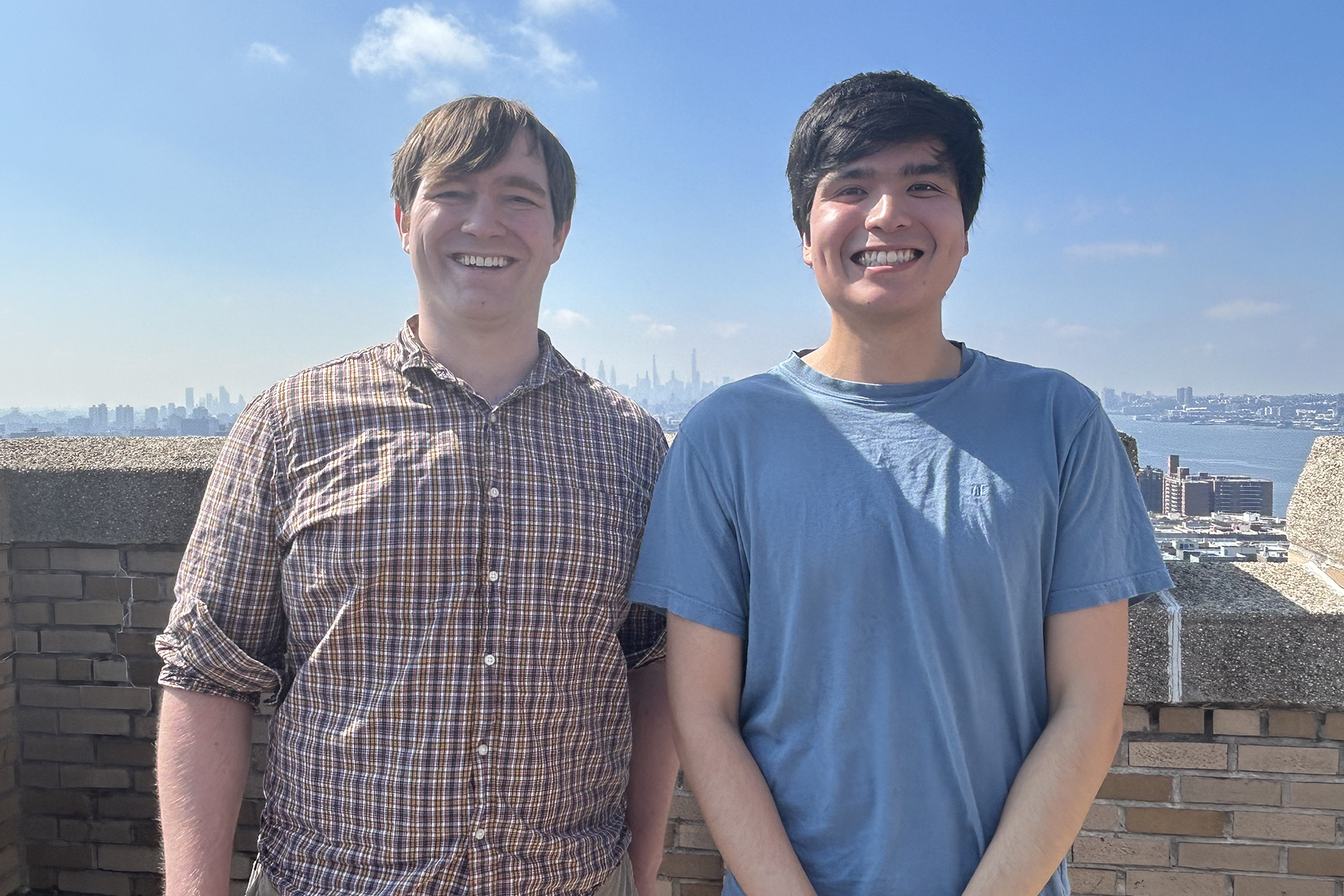
“Columbia is one of the only places really seriously investigating how we can deploy these kinds of bleeding-edge technologies into healthcare in a way that’s safe and reliable and actually makes sense,” McDermott said. “The extent to which the department is so collaborative and invested in everyone’s success—it allows us to better approach these problems in a meaningful way.”
McDermott sees DBMI as an environment uniquely suited to this moment in healthcare. Trainees are encouraged to work across disciplines, contribute to open-source communities, and engage with real clinical data and questions early in their training. As health AI moves from isolated experiments toward large-scale, shared infrastructure, DBMI offers trainees the chance to help shape that future—learning not just how to build powerful models, but how to do so in a way that serves medicine, patients, and the public good.